Reviewed for informational accuracy and clarity by qualified health content reviewers.
This content is educational and does not replace professional medical advice.
Snacking plays a bigger role in daily nutrition than many people realize. What you choose between meals can influence hunger levels, food cravings, and overall diet quality. Two common snack options — nuts and high-carbohydrate snack foods — affect the body in very different ways.
Recent research suggests that replacing refined, high-carb snacks with nuts may help reduce cravings and support healthier eating patterns, especially in young adults at risk for metabolic health concerns.
Understanding the Two Snack Types
What Are Nut-Based Snacks?
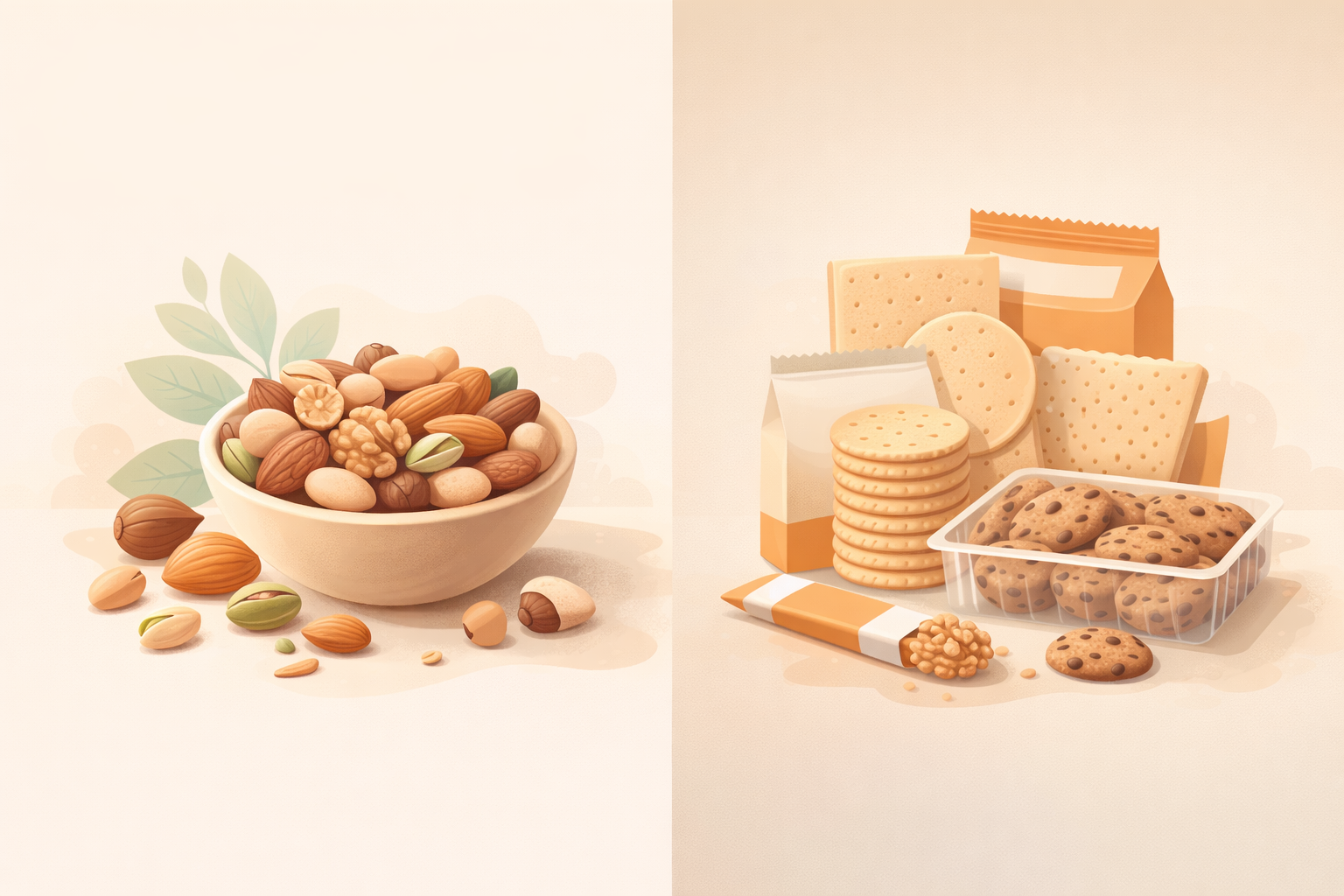
Nuts such as almonds, walnuts, pistachios, cashews, and pecans are whole foods rich in:
- Healthy unsaturated fats
- Plant-based protein
- Dietary fiber
- Micronutrients like magnesium and vitamin E
These nutrients are digested slowly, which can help promote longer-lasting fullness.
What Are High-Carbohydrate Snacks?
High-carb snacks often include foods such as:
- Crackers and pretzels
- Cookies and baked snacks
- Granola bars with added sugars
- Refined grain snack products
These foods are typically digested quickly and may lead to rapid changes in blood sugar levels.
How Nuts and High-Carb Snacks Affect Cravings
Nuts and Appetite Control
Nuts provide a balance of fat, protein, and fiber. This combination slows digestion and may help stabilize blood sugar levels. Steadier blood sugar is often associated with fewer sudden hunger signals and reduced cravings for sweet or salty foods.
Chewing whole nuts also takes more time, which may contribute to greater satisfaction after eating.
High-Carb Snacks and Hunger Cycles
Refined carbohydrates are broken down quickly in the body. While they can provide fast energy, they may also be followed by drops in blood sugar that trigger renewed hunger.
For some people, this pattern can increase cravings for sweets or fast food later in the day.
Impact on Diet Quality and Weight Management
Nuts and Overall Diet Patterns
Research indicates that people who regularly snack on nuts may:
- Consume more protein-rich foods overall
- Choose fewer refined snack foods
- Maintain stable calorie intake despite eating calorie-dense foods
This suggests that nuts may help improve overall diet quality without necessarily leading to weight gain.
High-Carb Snacks and Calorie Intake
High-carb snacks may be easier to overconsume, especially when eaten mindlessly. Some individuals find that these snacks increase total daily calorie intake without providing lasting fullness.
Over time, this may affect weight management if not balanced with other nutrient-dense foods.
Nuts and Metabolic Health
Nuts contain nutrients that support metabolic processes, including healthy fats and fiber. These components may help regulate appetite-related hormones involved in feelings of hunger and fullness.
For individuals concerned about blood sugar balance and metabolic health, snack choices that promote steady energy may be especially beneficial.
What If You’re Allergic to Nuts?
For those with tree-nut allergies, alternatives that provide similar benefits include:
- Seeds (pumpkin, sunflower, chia)
- Roasted legumes such as chickpeas or edamame
- Greek yogurt paired with fruit or seeds
- Hummus with vegetables
These options also provide protein, fiber, and healthy fats.
How Much Is a Healthy Portion?
Nutrition experts often suggest:
- About a small handful (¼ cup) of nuts per serving
- Choosing raw or dry-roasted varieties
- Limiting salted or flavored options to reduce sodium intake
Portion awareness is important, as nuts are calorie-dense despite their nutritional benefits.
Final Thoughts
When comparing nuts and high-carb snacks, the key difference lies in how they affect hunger, cravings, and diet quality. Nuts offer a nutrient-dense option that may support appetite control and balanced eating patterns, while refined high-carb snacks may contribute to fluctuating hunger for some individuals.
Rather than eliminating snacks altogether, choosing options that promote satisfaction and steady energy can support long-term health goals.
Sources
- Harvard T.H. Chan School of Public Health – Nuts and Health
https://nutritionsource.hsph.harvard.edu/nuts-for-the-heart/ - National Institutes of Health (NIH) – Dietary Fats and Metabolism
https://www.nih.gov/news-events/nih-research-matters - National Center for Biotechnology Information (NCBI) – Nuts and Appetite Regulation
https://www.ncbi.nlm.nih.gov/pmc/articles/PMC5452225/ - Centers for Disease Control and Prevention (CDC) – Healthy Eating Patterns
https://www.cdc.gov/nutrition/healthy-eating/index.html
