Medically reviewed for informational accuracy. This article is for educational purposes and does not replace professional medical advice.
Many people finish a meal and immediately sit down or lie on the couch. While rest feels natural after eating, research suggests that light movement after meals — especially walking — may offer important health benefits.
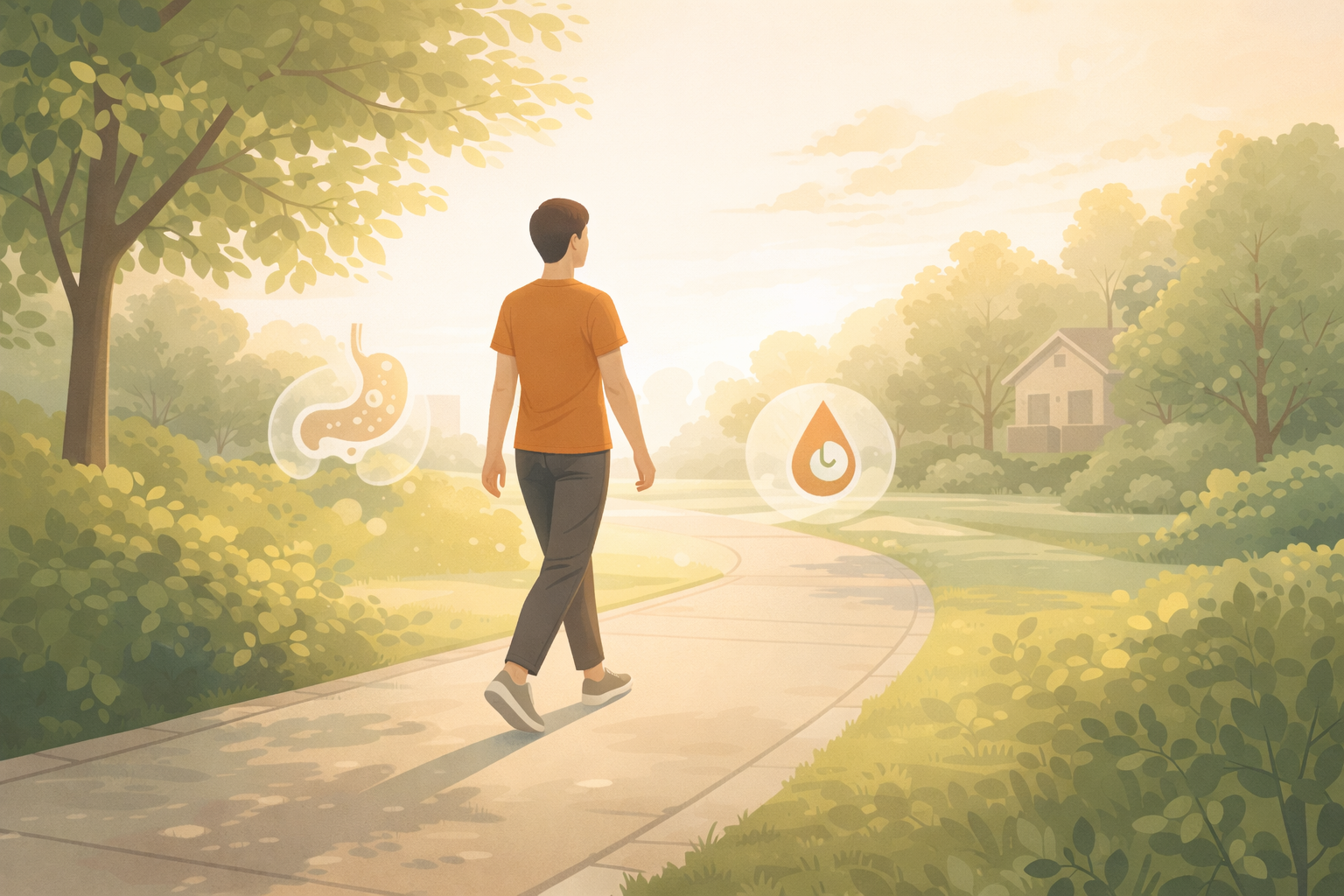
A short walk after eating can support digestion, help regulate blood sugar, and contribute to long-term metabolic health. The key is consistency, not intensity.
How Walking After Meals Affects Digestion
Digestion is an active process that benefits from gentle movement. Walking encourages the natural contractions of the digestive tract, helping food move smoothly through the system.
Potential digestive benefits include:
- Reduced bloating and gas
- Less feeling of heaviness after meals
- Improved gut motility
This is especially helpful after larger or fiber-rich meals.
Walking and Blood Sugar Control
After eating, blood sugar levels naturally rise. Light physical activity helps muscles use glucose more efficiently, which may reduce sharp spikes in blood sugar.
Research shows that even 10–15 minutes of walking after meals can:
- Improve glucose regulation
- Support insulin sensitivity
- Reduce post-meal energy crashes
Benefits for Weight Management
Walking after meals does not burn large numbers of calories, but its impact is cumulative. Regular post-meal movement may:
- Improve appetite regulation
- Reduce late-day cravings
- Support healthy metabolism
Over time, small habits like walking can contribute to sustainable weight management.
How Walking Supports Heart Health
Light walking improves circulation and supports cardiovascular function without putting stress on joints. Regular post-meal walks may help:
- Lower blood pressure over time
- Improve lipid metabolism
- Reduce sedentary time
Consistency matters more than speed.
How Long and How Fast Should You Walk?
You don’t need an intense workout. The most effective approach is simple:
- Duration: 10–20 minutes
- Pace: Comfortable, conversational pace
- Timing: Within 30 minutes after eating
Even shorter walks still offer benefits.
Who Should Be Careful?
Walking after meals is safe for most people. However, those with medical conditions such as severe gastrointestinal disorders, balance issues, or heart conditions should consult a healthcare professional before changing activity habits.
Listening to your body is essential.
Simple Ways to Build the Habit
- Walk around your home or neighborhood
- Take a phone call while walking
- Walk with family members after dinner
- Use reminders after meals
Making walking enjoyable increases consistency.
Final Thoughts
Walking after meals is a simple, low-effort habit that supports digestion, blood sugar control, and overall health. You don’t need special equipment or long workouts — just regular, gentle movement.
Small steps, repeated daily, can make a meaningful difference.
