Reviewed for informational accuracy and clarity by qualified health content reviewers.
This content is educational and does not replace professional medical advice.
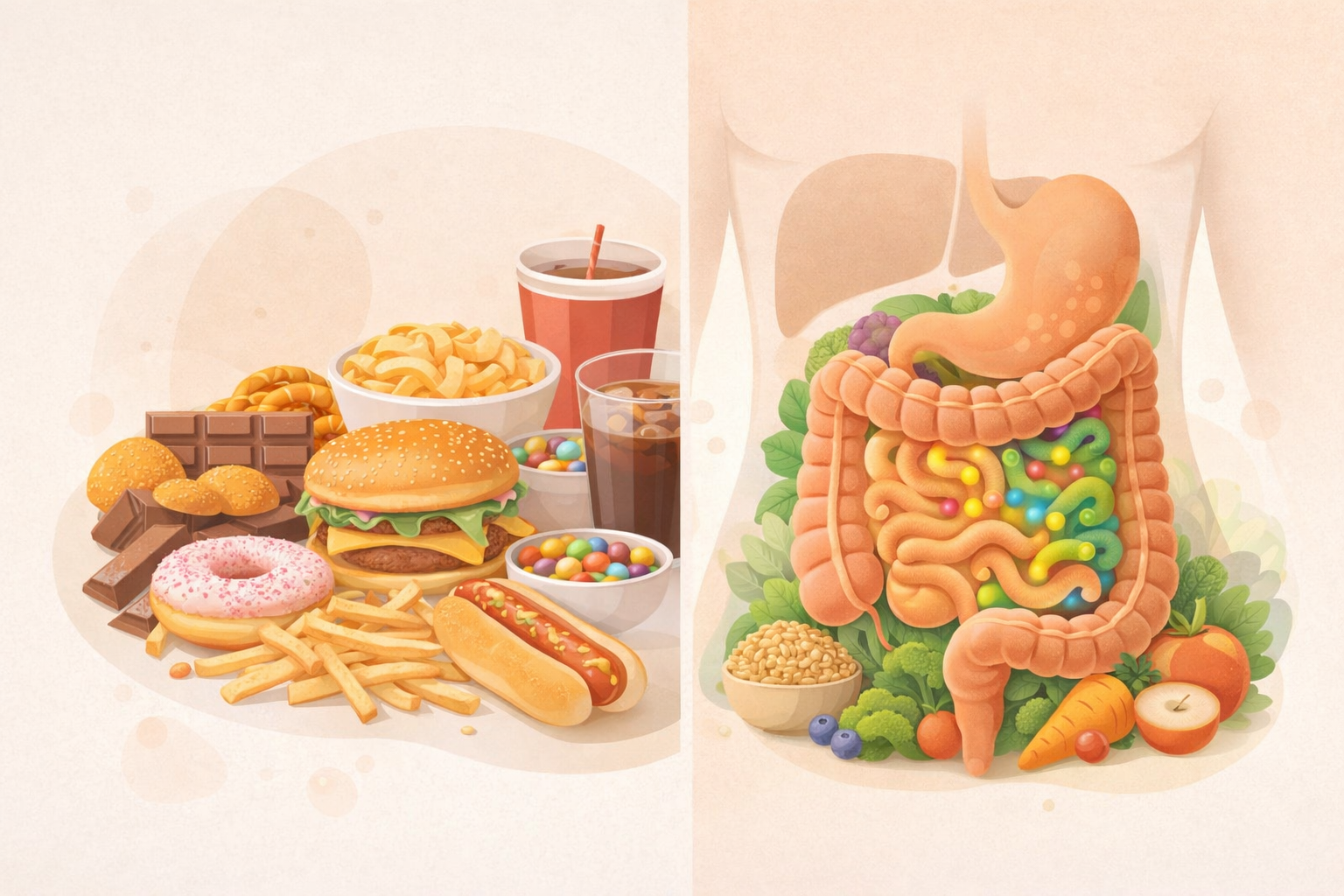
Ultra-processed foods have become a regular part of modern diets. From packaged snacks to ready-to-eat meals, these products are convenient and widely available. However, growing research suggests that frequent consumption of ultra-processed foods may influence gut health and overall wellness.
Understanding how these foods affect the body can help people make more informed dietary choices that support long-term health.
What Are Ultra-Processed Foods?
Ultra-processed foods are products made primarily from refined ingredients, additives, preservatives, and artificial flavors. They are typically designed for long shelf life and enhanced taste rather than nutritional value.
Common examples include:
- Packaged snacks
- Sugary beverages
- Instant noodles
- Processed meats
These foods differ from whole or minimally processed foods such as fruits, vegetables, grains, and legumes.
How Ultra-Processed Foods Affect Gut Health
The digestive system relies on a balanced gut environment to function properly. Diets high in ultra-processed foods may lack fiber and beneficial nutrients needed to support healthy gut bacteria.
An imbalance in gut bacteria can influence gut health, which plays a key role in digestion, immunity, and overall body balance.
Impact on Digestion and Nutrient Absorption
Ultra-processed foods are often low in dietary fiber, which helps regulate digestion and support beneficial gut bacteria. Diets rich in whole foods and fiber may support better digestive health and nutrient absorption.
Ultra-Processed Foods and Blood Sugar Balance
Highly processed foods often contain refined carbohydrates and added sugars that may contribute to rapid changes in blood sugar levels. Frequent blood sugar fluctuations can affect energy, focus, and metabolic balance.
Supporting blood sugar balance through whole foods and consistent eating habits may help promote stable energy levels throughout the day.
Signs Your Diet May Be Too Processed
Some people may notice:
- Digestive discomfort
- Low energy levels
- Increased cravings
- Difficulty feeling full
These signs can vary and are influenced by overall diet and lifestyle habits.
Simple Ways to Reduce Ultra-Processed Foods
Choose Whole Foods More Often
Fruits, vegetables, whole grains, legumes, and lean proteins provide nutrients that support overall wellness.
Read Food Labels
Short ingredient lists with recognizable foods are generally better choices.
Prepare Meals at Home
Cooking at home allows more control over ingredients and portion sizes.
Final Thoughts
Ultra-processed foods are common in modern diets, but frequent consumption may influence gut health and overall wellness. By prioritizing whole foods, fiber-rich meals, and balanced eating habits, individuals can support their digestive system and long-term health naturally.
