Reviewed for informational accuracy and clarity by qualified health content reviewers.
This content is educational and does not replace professional medical advice.
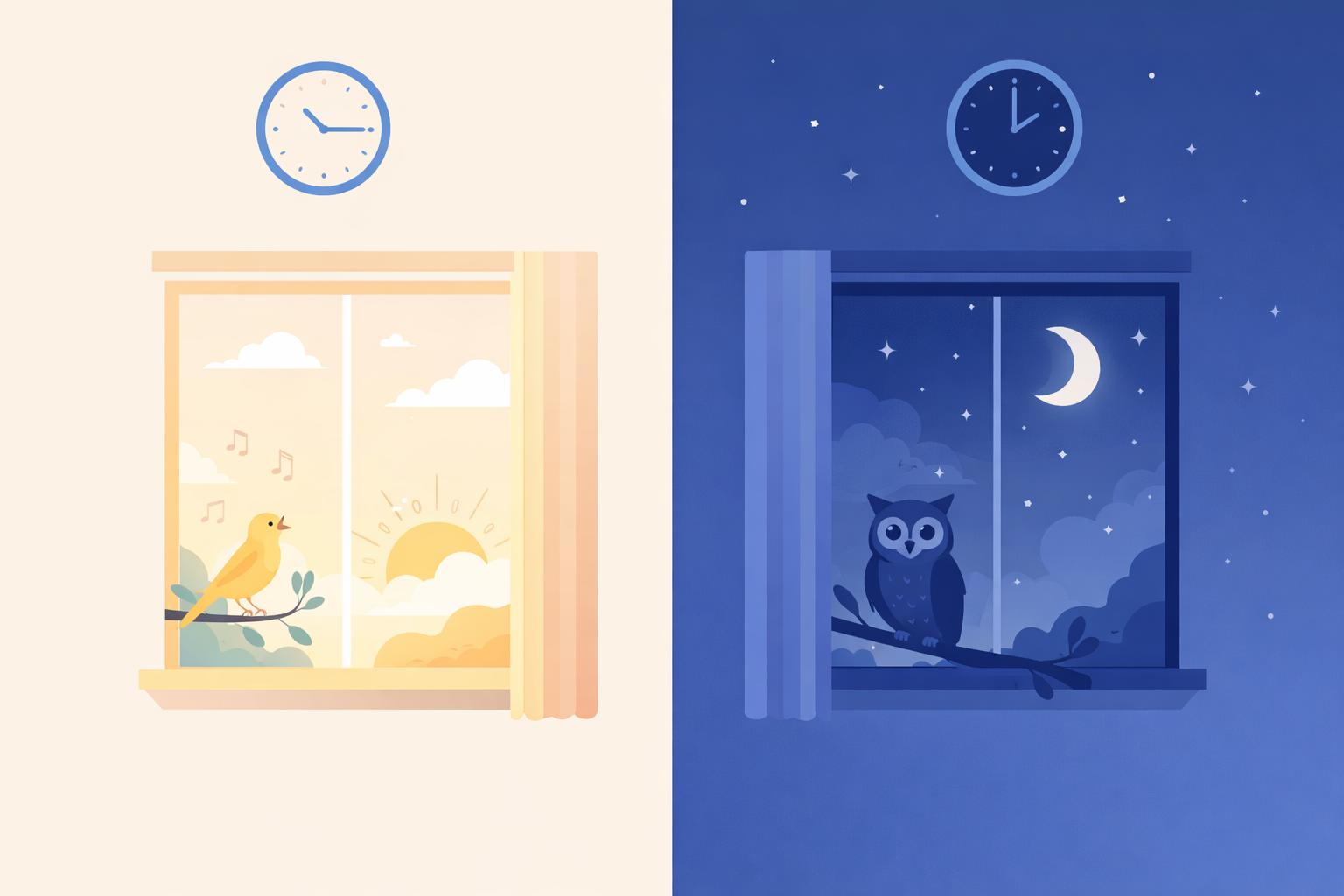
Some people feel most alert early in the morning, while others do their best thinking late at night. These natural preferences are often described as being an early bird or a night owl. Rather than being a habit or choice, these patterns are linked to an individual’s internal body clock.
Understanding your sleep chronotype can help you make better decisions about work schedules, sleep routines, and overall health.
What Does “Early Bird” Mean?
Early birds, sometimes called morning types, naturally feel sleepy earlier in the evening and wake up earlier in the morning.
Common traits include:
- Feeling most energetic in the morning
- Waking up easily without an alarm
- Preferring earlier meals and activities
- Feeling tired earlier at night
Because many workplaces and schools follow daytime schedules, early birds often find it easier to align with social routines.
What Does “Night Owl” Mean?
Night owls, or evening types, tend to feel alert later in the day and prefer going to bed late.
Typical characteristics include:
- Higher energy in the evening or at night
- Difficulty waking up early
- Feeling mentally sharp later in the day
- Preferring late meals or activities
Night owls may struggle with traditional schedules, especially if they must wake early for work or school.
What Influences Whether You’re an Early Bird or Night Owl?
Genetics
Research suggests that genetics play a role in determining sleep preference. Some people are naturally wired to feel alert earlier or later in the day.
Circadian Rhythm
Your circadian rhythm is your body’s internal clock, regulating sleep, hormone release, and energy levels. Light exposure, daily routines, and age can all influence this rhythm.
Lifestyle and Environment
Work schedules, screen use, stress, and physical activity levels can reinforce or disrupt natural sleep patterns.
Are Early Birds Healthier Than Night Owls?
Neither chronotype is inherently better. What matters most is sleep quality and consistency, not whether sleep happens early or late.
Some studies suggest that night owls may face challenges if their schedule forces them to wake early consistently, leading to insufficient sleep. However, this is often due to misalignment, not the chronotype itself.
Getting enough restorative sleep — regardless of timing — is essential for physical and mental well-being.
How to Identify Your Natural Sleep Pattern
You can learn your chronotype by observing when you naturally feel sleepy and wake up without alarms over several days, ideally during a break or vacation.
- Feeling alert early and sleepy early → likely an early bird
- Feeling alert late and struggling in the morning → likely a night owl
Most people actually fall somewhere between the two extremes.
Can You Change Your Sleep Pattern?
You can adjust your schedule gradually, though drastic changes are difficult to maintain.
Helpful strategies include:
- Keeping consistent sleep and wake times
- Getting natural light in the morning
- Reducing screen exposure at night
- Maintaining regular meal times
- Practicing good sleep hygiene
As people age, many naturally shift toward earlier sleep and wake times.
The Bottom Line
Being a night owl or early bird is a natural variation in how the body functions. Neither is better or worse. The most important factors for health are getting enough sleep, maintaining consistency, and aligning daily routines as closely as possible with your natural rhythm.
If sleep problems persist or interfere with daily life, a healthcare provider or sleep specialist can offer guidance.
