Reviewed for informational accuracy and clarity by qualified health content reviewers.
This content is educational and does not replace professional medical advice.
Modern life makes sitting unavoidable. From working at desks to scrolling on phones, many people spend long hours seated each day. While sitting itself is not harmful, research suggests that prolonged sitting may affect overall health when it replaces regular movement.
Understanding how extended sitting influences the body can help people make small, practical changes that support long-term well-being.
Why Prolonged Sitting Matters
The human body is designed for regular movement. When the body remains still for long periods, certain systems slow down. Circulation becomes less efficient, muscles are less engaged, and energy use decreases.
Over time, these changes may contribute to discomfort and reduced physical resilience, especially when daily movement is limited.
Effects of Too Much Sitting on the Body
Reduced Energy and Focus
Sitting for extended periods may lead to sluggishness and reduced mental clarity. Light movement encourages blood flow, which helps deliver oxygen and nutrients to the brain.
Muscle and Joint Stiffness
Lack of movement can cause tightness in the hips, back, and shoulders. Gentle activity throughout the day helps maintain flexibility and comfort.
Impact on Metabolic Health
Long periods of inactivity may influence how the body processes energy. Regular movement supports healthy metabolic function and balanced daily energy levels.
Sitting, Digestion, and Daily Comfort
Movement supports digestive processes by encouraging normal gut activity. Remaining seated for long stretches, especially after meals, may contribute to feelings of heaviness or discomfort.
Supporting digestive health through light activity, such as short walks, can be beneficial.
The Role of Movement in Overall Health
Physical activity does not need to be intense to be effective. Simple habits like standing, stretching, or walking briefly can support overall health when practiced consistently.
Even small amounts of movement throughout the day can add up.
Simple Ways to Reduce Sitting Time
Take Regular Movement Breaks
Standing or walking for a few minutes every hour can help reset the body.
Use Daily Activities as Movement
Household tasks, walking while talking on the phone, or stretching during breaks all contribute to daily activity.
Adjust Your Workspace
Alternating between sitting and standing while working may help reduce prolonged inactivity.
How Much Movement Is Enough?
Health organizations often recommend incorporating moderate physical activity into daily routines. This does not require formal exercise sessions — consistency and frequency matter more than intensity.
Listening to your body and finding enjoyable ways to move increases the likelihood of maintaining healthy habits.
Final Thoughts
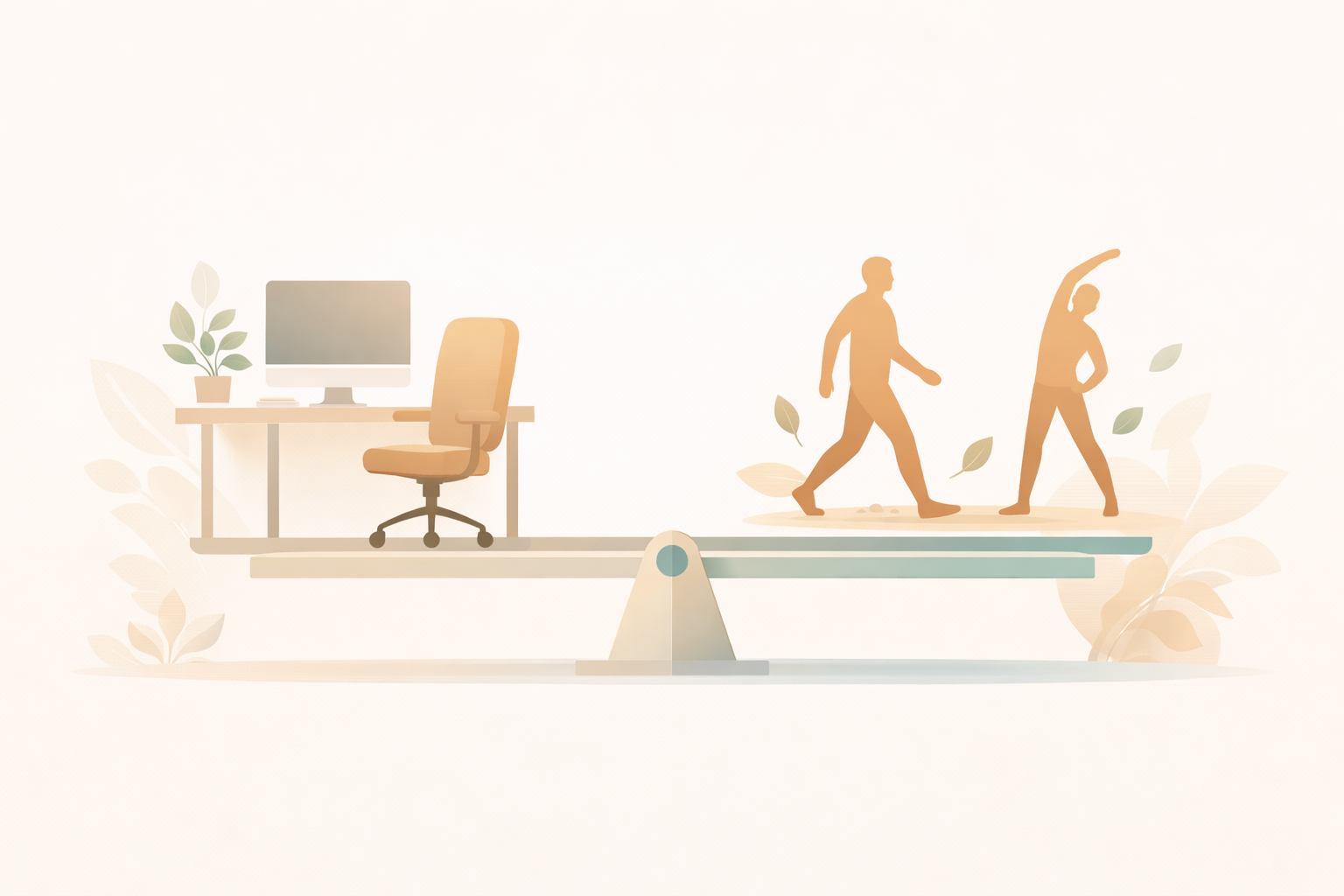
Sitting is a normal part of modern life, but balance is key. Incorporating regular movement into the day supports comfort, energy, and overall well-being. Small, intentional changes can make a meaningful difference over time.
Sources
Centers for Disease Control and Prevention (CDC) – Physical Activity Basics
National Institutes of Health (NIH) – Benefits of Physical Activity
Harvard Health Publishing – Health Risks of Too Much Sitting
World Health Organization (WHO) – Physical Activity Guidelines
