Reviewed for informational accuracy and clarity by qualified health content reviewers. This content is educational and does not replace professional medical advice.
Dietary fiber plays an essential role in digestive health, yet many people do not consume enough of it daily. As interest in gut health continues to grow, fiber-rich foods are gaining attention for their role in supporting digestion and overall wellness.
In everyday life, choosing the right foods can help maintain digestive comfort and support a balanced gut environment.
What Is Dietary Fiber?
Dietary fiber is a type of carbohydrate found in plant-based foods that the body cannot fully digest. Instead of being broken down, fiber passes through the digestive system and supports normal digestion.
Fiber is commonly divided into two main types: soluble fiber and insoluble fiber.
Types of Fiber and Their Roles
Soluble Fiber
Soluble fiber dissolves in water and forms a gel-like substance in the digestive tract. It may help support digestion and nutrient absorption.
Insoluble Fiber
Insoluble fiber adds bulk to stool and helps food move through the digestive system, supporting regular digestion.
Both types are important for overall digestive wellness.
Why Fiber Matters for Digestive Health
Fiber-rich foods help nourish beneficial gut bacteria and support a healthy gut microbiome. Many people notice improved digestive comfort when fiber intake is balanced and consistent. Fiber also works alongside probiotics and prebiotics to support a balanced gut environment.
A diet that includes adequate fiber may support:
- Digestive regularity
- Gut microbiome balance
- Overall digestive comfort
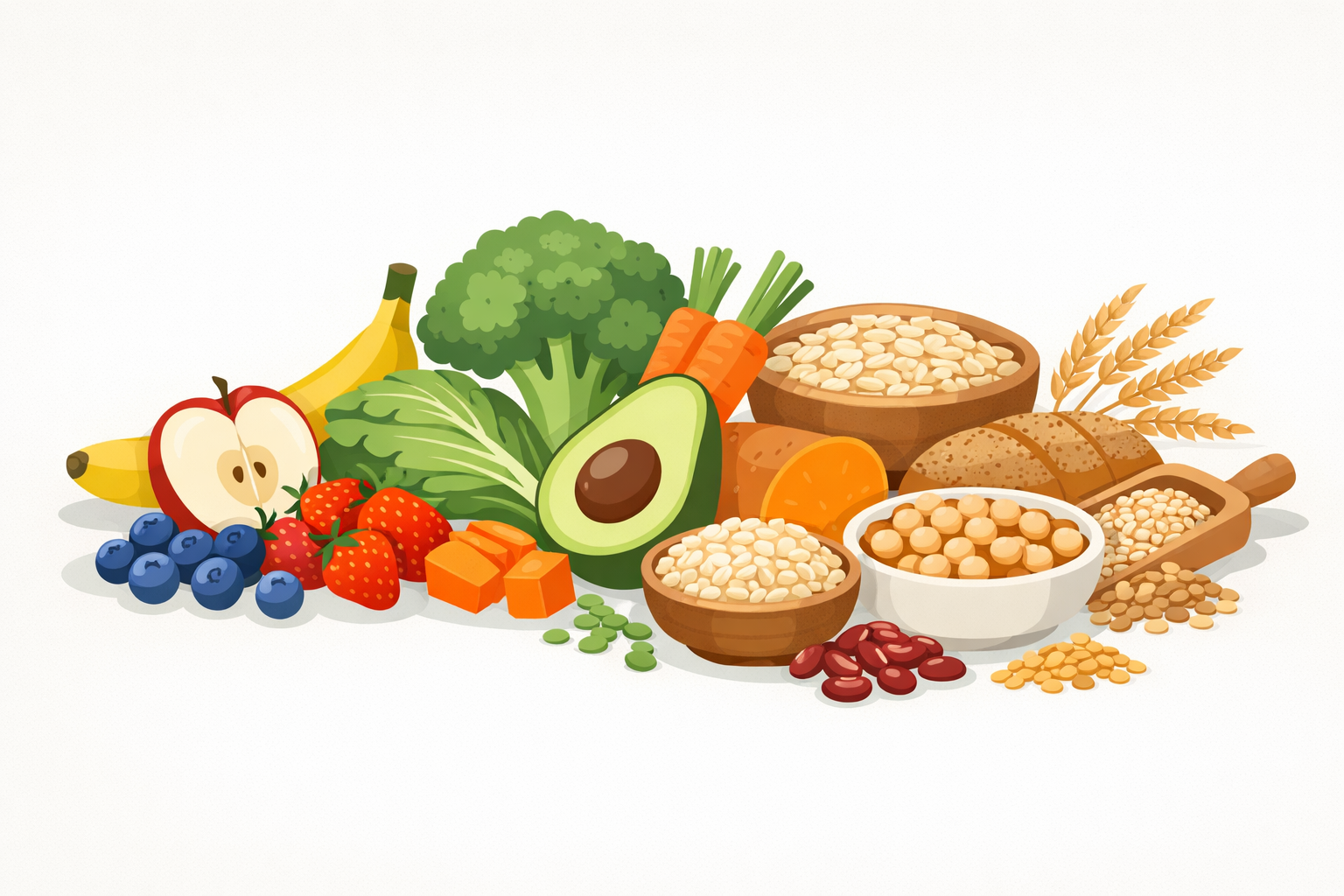
Fiber-Rich Foods to Include in Your Diet
Fruits
Examples include:
- Apples
- Pears
- Berries
- Oranges
These fruits provide natural fiber along with vitamins and antioxidants.
Vegetables
Vegetables such as:
- Broccoli
- Carrots
- Spinach
- Sweet potatoes
offer fiber while supporting overall nutrition.
Whole Grains
Whole grains like:
- Oats
- Brown rice
- Whole wheat
- Quinoa
are excellent sources of dietary fiber and support digestive balance.
Legumes
Beans, lentils, and chickpeas provide both fiber and plant-based protein, making them valuable additions to a balanced diet.
Tips for Increasing Fiber Intake Safely
Increasing fiber intake gradually helps avoid digestive discomfort. Drinking enough water and maintaining a balanced diet supports the digestive system as fiber intake increases.
In everyday life, small changes—such as adding fruits, vegetables, or whole grains—can make a meaningful difference.
Fiber and Supplements (General Overview)
Some people consider fiber supplements as part of a wellness routine. These products are intended to support general digestive health and should not replace a balanced diet or professional medical advice.
Final Thoughts
Fiber-rich foods play an important role in supporting digestive health naturally. Including a variety of plant-based foods in daily meals can help maintain digestive comfort and overall wellness over time.
Sources
National Institutes of Health (NIH) – Dietary Fiber and Digestive Health
National Center for Biotechnology Information (NCBI) – Dietary Fiber and Gut Microbiota
Harvard Health Publishing – Fiber: The Carb That Helps You Manage Diabetes
